


Q4 2026 midmarket M&A outlook: partner perspectives
As 2026 heads into its final quarter, we asked partners across our offices what has changed since the summer, where buyers are looking, and what could surprise the market before year end.
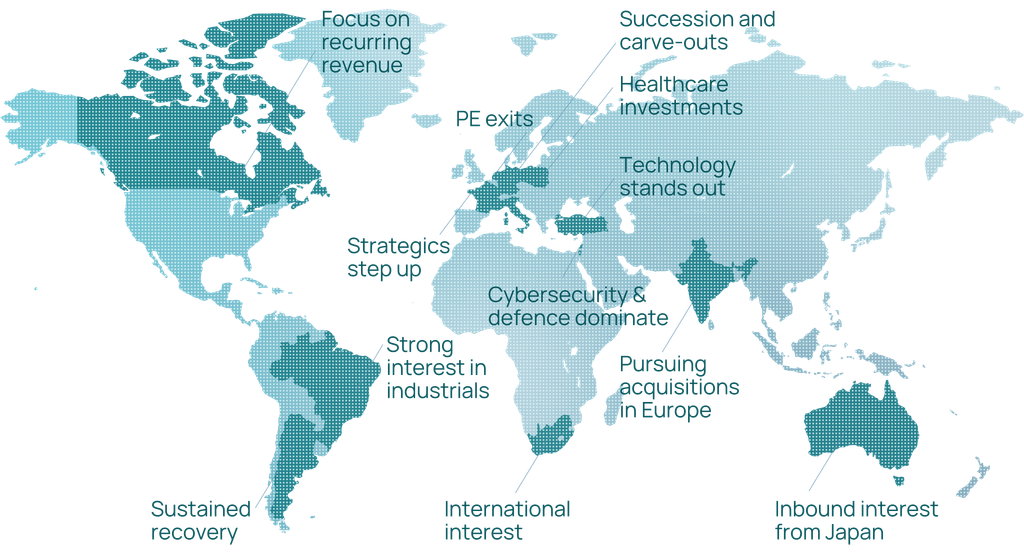
Their answers describe a market that remains active and selective. Elections, trade policy, and regional instability are shaping deal timing in almost every region. Private equity sponsors face growing pressure to exit, and corporate carve-outs are opening doors for buyers prepared to take on operational work.
Europe

M&A in Germany: pipelines strengthen after a cautious half
Christian Saxenhammer, Clairfield in Germany
European and North American strategics and financial investors are particularly drawn to specialised Mittelstand companies with leading technology or international growth potential. German companies are looking to buy abroad to secure market access, capabilities and more resilient supply chains.
Technology, business services, defence-related manufacturing, energy infrastructure, and specialised industrials draw the most interest, driven by AI, European security and infrastructure investment, and the need to acquire skilled employees.
„Activity in Germany is improving, with stronger pipelines and renewed crossborder interest following a cautious first half. Buyers remain selective, but well-positioned companies with resilient earnings, clear growth opportunities and realistic valuation expectations are attracting competitive interest.”
Christian Saxenhammer

Energy prices and financing costs will affect valuations and timing, and tighter scrutiny of foreign investment in critical sectors means buyers need to plan for regulatory approvals much earlier. Our German office expects a noticeable rise in succession, restructuring and transformation-driven deals among mid-sized industrial and automotive companies, creating opportunities for buyers willing to invest in operational improvement, carve-outs or repositioning.
M&A in France: strategics step up as sponsors grow selective
Marie Dokchine, Clairfield in France
Midmarket activity in France is holding at a reasonable level. Strategic buyers are doing more of the work, and prices, which began recovering in early 2026, have held steady. Private equity is more selective with fewer deals and focuses on robust business models, with attractive valuations for recurring businesses and niche expertise.
Cash-rich US funds and strategics are targeting mid-sized French companies for their technical and high-end expertise. Going the other way, French midmarket groups, particularly those backed by private equity, are pursuing bolt-ons across Europe and beyond as organic growth becomes harder to find, and the French office is working on several buyside mandates.

“Defence and sovereign-related industries lead buyer interest, alongside healthcare, which is structurally resilient. Software buyers remain active, although they review business models closely. AI exposure is now a key diligence item, and pricing has come under pressure in some cases.”
Marie Dokchine
Marie’s one to watch is a succession bottleneck. Many family-business owners held back from sale processes through 2025 and early 2026 while waiting for political and fiscal clarity, and a large number are now likely to come to market.
M&A in the Netherlands: private equity keeps the pipeline full
Mark Spetter, Clairfield in the Netherlands
Dutch midmarket activity remains healthy heading into Q4, backed by a solid pipeline and substantial private equity dry powder. Buyers focus on recurring revenue, strong market positions, healthy cash generation, and demonstrable growth. Inbound interest continues from across Europe and North America, and Dutch companies and sponsor-backed platforms keep pursuing add-ons across the continent.
„One trend we expect to persist is the continued flow of private equity exits, as sponsors remain under pressure to return capital to investors. However, we do not anticipate a broad-based rebound: high-quality assets should continue to attract strong competition.”
Mark Spetter
More complex businesses, Mark adds, may need longer preparation, flexible deal structures, or more realistic valuation expectations to reach a successful exit.
M&A in Poland: large deals return as domestic activity grows
Piotr Kolodziejczyk, Clairfield in Poland
Deal volumes in Poland are stable, with a handful of very large transactions in e-commerce logistics and convenience retail lifting overall value. This reflects a consumer shift away from large format retailers and shopping malls. Beyond consumer, Piotr sees two themes that will sound familiar elsewhere in Europe.
„There is strong interest in suppliers to the defence industry and AI-related infrastructure. Healthcare investments stay strong with double-digit growth in the sector and good prospects due to an ageing population and higher affluence in the private sector.”
Piotr Kolodziejczyk
Domestic deals are growing fastest, and crossborder buyers retain a strong share of large and upper midcap transactions.
M&A in Italy: sought-after sectors and longer processes
Filippo Guicciardi, Clairfield in Italy
Private equity funds returned to Italian industrials in H1, and crossborder activity has grown in both directions, led by the chemicals and energy sectors.
For Filippo, winning mandates is the easy part. Closing them takes longer and longer, unless a deal sits in one of the few sectors everyone wants. His Q4 hope will resonate with dealmakers everywhere, as frustration with lengthy processes builds and everyone tries to speed things up.
„Pharmaceutical and nutraceutical, cybersecurity, food and cosmetics ingredients are currently attracting the most buyer interest. Geopolitical issues are slowing down oil and gas activity, which is expected to recover in 2027.”
Filippo Guicciardi

M&A in Türkiye: software draws international buyers
Müge Tuna, Clairfield in Türkiye
M&A activity in Türkiye remains selective, with strategic buyers focusing on businesses with strong fundamentals, export exposure, and sustainable cash generation. Discussions around selected opportunities are picking up again after the summer, while valuation expectations and financing costs continue to influence deal execution.

„Technology, particularly enterprise software, stands out as a key area of interest. We are actively involved in both buyside and sellside mandates in this sector. Energy, particularly renewables and electrical equipment, also continues to attract interest.”
Müge Tuna
Major international groups are looking closely at Turkish software companies, and inbound interest extends to industrial businesses with strong export capabilities and potential for international growth. Turkish groups are also buying in Europe and further afield to diversify operations and widen their geographic footprint. Interest rates, inflation, and the exchange rate will shape transaction activity through the quarter, alongside the gap between buyer and seller price expectations.
Beyond M&A, the Turkish office is arranging substantial long-term financing for leading Turkish corporates with major international financial institutions, supporting their investment plans and international growth ambitions.
Middle East

M&A in Israel: fewer deals, larger tickets
Joseph Sabet, Clairfield in Israel
Technology dominates in Israel too, though geopolitics weighs more heavily on dealmaking there. Transaction numbers have fallen significantly in recent years but the deals that do close tend to be very large, involving companies with limited exposure to the Israeli market and a global workforce. Cybersecurity and defence dominate, and software continues to appeal because SaaS models scale without supply chain risk.
Regional instability and reduced flight connections have made other overseas acquirers hesitant.
„US strategic investors and private equity make up over 80% of buyers of Israeli tech companies. Regarding crossborder interest, Israeli companies look to both the US and Europe for add-ons.”
Joseph Sabet

He remains hopeful that greater stability across the region will bring prosperity and additional deal flow.
Americas

M&A in Canada: trade policy sets the tempo
Peter Brown and Oliver Khan, Clairfield in Canada
Reliance on US buyers carries its own risks in Canada, where trade policy uncertainty marks the biggest change since the summer. Our partners in Canada describe the mood as cautiously optimistic, with the impact so far concentrated in sectors with direct tariff or crossborder exposure.
US acquirers are more hesitant than six months ago. Diligence now covers tariffs, rules of origin, manufacturing footprint, and US customer exposure. The US remains the natural expansion market for Canadian companies, although more are now looking to diversify. Government spending and foreign investment inflows help offset the uncertainty. The partners see some activity being delayed rather than cancelled, so any easing of tension could make Q4 stronger than many expect.

“Continued tariff escalation will hurt confidence in exposed sectors, while any clarity or de-escalation would be positive for deal flow. So you have trade uncertainty on one side, but strong buyer appetite and continuing government spending and foreign investment inflows in certain sectors to offset the political uncertainty south of the border.”
Peter Brown
„There is continued strong interest in industrials, business services, technology, and infrastructure-related businesses. Buyers are particularly focused on businesses with recurring revenue, strong margins, diversified customers, and limited discretionary exposure versus growth.”
Oliver Khan
M&A in Brazil: industrials draw buyers as sponsors step back
Érico Nikaido, Clairfield in Brazil
Canada’s push to diversify could benefit markets further south. Clairfield’s partner in Brazil, Érico Nikaido, states that M&A remains healthy and selective, although the proximity of the presidential election is creating some short-term caution. Technology and financial services are attracting buyers, and healthcare and agribusiness have slowed. Private equity is much less active after difficult fundraising, and international strategic buyers have partly taken its place in competitive processes.
Another important topic is the tax reform, as Brazil is finally moving toward a VAT-based tax system. A significant part of the new framework will become effective in 2027, so companies are starting to look more carefully at its impact on business models, cash flows and transaction structures.

„We are seeing particularly strong interest in industrial businesses, including from European and Asian strategic buyers. Brazil offers a large domestic market, competitive industrial capabilities and relatively cheap and abundant energy, while also being geographically distant from most of the geopolitical issues affecting Europe and Asia today.”
Érico Nikaido
M&A in Argentina: recovery spreads beyond natural resources
Miguel Ángel Arrigoni, Clairfield in Argentina
Across the border, momentum is building in Argentina.
„The Argentine M&A market has left behind its low-activity cycle and entered a phase of sustained recovery, with deal flow set to sit above its historical average for the second year in a row. That has put Argentina back on the regional and international M&A radar.”
Miguel Ángel Arrigoni

Oil, gas, and mining account for around 30% of the pipeline. Mining is still heavily concentrated in lithium, with copper beginning to materialize. Additionally, financial services, fuel distribution, dairy, and energy privatisations have produced large deals, and consolidation is running through a broad range of sectors.
Local acquirors make up around two thirds of the market, although inbound interest has returned. Asian buyers focus on critical minerals, European and Latin American strategics on consumer, food, and industrial assets, and North American buyers on technology and entertainment.
With the 2027 presidential election approaching, the partner expects Q4 and early 2027 to offer the last straightforward window to sign, pulling processes forward.
Africa

M&A in Southern Africa, Nigeria and India: established themes keep delivering
Dipeel Parbhoo, Clairfield in Sub-Saharan Africa
M&A activity remains elevated across Southern Africa, Nigeria and India. Several themes that emerged 18 to 24 months ago continue to drive deals in 2026. Large diversified corporates are divesting non-core operations to focus where they have a „right to win”. Indian companies are pursuing acquisitions in continental Europe and the US, and South African and pan-African sponsors have raised capital successfully and now need to deploy it.

„There is strong international appetite for quality African businesses in the context of somewhat depressed equity valuations, particularly in the listed environment. Indian companies are increasingly exploring offshore acquisition opportunities.”
Dipeel Parbhoo
Resources, mining and metals remain central, with activity boosted by the commodity cycle. In South Africa, chemicals, food and agriculture, business services, logistics, and TMT all attract buyers on the strength of their fundamentals and growth prospects. The regulatory and economic backdrop remains supportive, and Dipeel does not expect November’s municipal elections to affect deal flow significantly.
Asia-Pacific

M&A in Australia: the buyer base shifts north
Mark Steinhardt and Sharon Doyle, Clairfield in Australia
Clairfield in Australia is entering the new financial year with a sharper sector focus, investment in technology, and disciplined deal selection. Its buyer base is shifting too.
Our team are seeing investor interest across a broad range of sectors. Technology and health continue to feature highly, albeit at lower valuations than in previous years. Interest has risen markedly in building services and labour-based businesses, particularly essential services less exposed to AI disruption. Tighter competition standards and changes to capital gains tax have weighed on investor confidence, prompting investors to adjust their criteria and business owners to bring forward sale decisions.
„Inbound international interest is driving strong activity right across the Australian mid-market, including a particularly strong appetite for defence or infrastructure exposure. Imminent changes to personal CGT structure has also triggered an uptick in willing sellers.”
Sharon Doyle

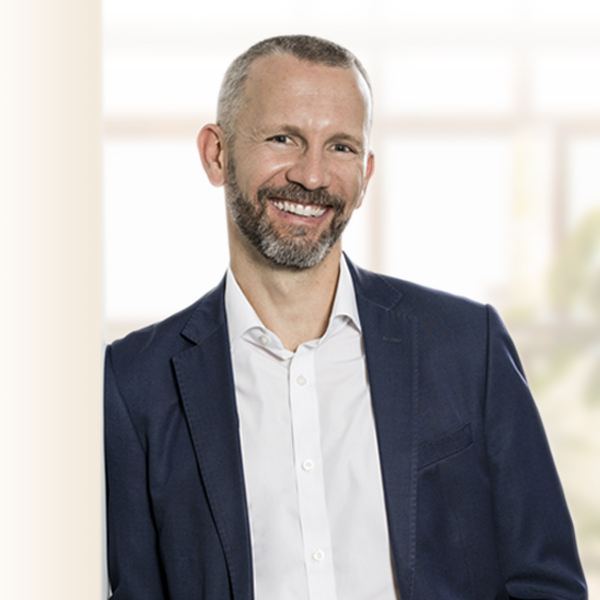
„The US has traditionally been a key source of Australian M&A activity. However, the current environment has made this challenging. Instead, we’re seeing significant inbound interest from Japanese investors, and both inbound and outbound activity with European businesses.”
Mark Steinhardt
Mark and Sharon close this edition with a confident prediction: Clairfield in Australia will be a frontrunner in the 2026 league tables, with a few surprises along the way!
About Clairfield International
Clairfield International is a global midmarket M&A advisory partnership with more than 34 locations worldwide. Our partners advise founders, families, corporates, private equity and public sector clients on sellside and buyside transactions, financing and strategic advisory, combining local market knowledge with crossborder reach.
We work across core sectors including tech, software, and digital, industrials, healthcare, business services, consumer goods and retail, and energy, cleantech and resources.
To discuss a transaction in any of our markets, contact your local Clairfield team.
