


“What matters most in M&A is the personal interaction” — Christian Saxenhammer
The founder of Clairfield’s German partner, Christian Saxenhammer, reflects on the firm’s early years, its first year in the partnership, and its ambitions for the next chapter.
Clairfield’s partner in Germany, Saxenhammer, turns 20 this year. Christian Saxenhammer founded the firm in 2006, during a challenging time for the German market. It has since grown into one of the country’s best known independent midmarket M&A advisors.
In 2025, Saxenhammer joined Clairfield. In this interview, Christian talks to Clairfield about the early years, the firm’s growth over the past two decades, and what joining the partnership has meant.

Founding and early years
Looking back to 2006, what was the German midmarket M&A landscape like then, and what gap did you see that made you want to build something of your own?
The market was much smaller and there were far fewer players. The larger firms were mostly American, and one or two houses that had been in Germany for decades. It was a smaller landscape with fewer deals, and private equity had only arrived in Germany at the start of the 2000s.


Twenty years ago, we started with a clear conviction: entrepreneurs need advisors who think entrepreneurially themselves. Nothing about that has changed to this day.
Twenty years ago, we started with a clear conviction: entrepreneurs need advisers who think entrepreneurially themselves. Nothing about that has changed to this day. What is new is the scale of our ambition. We want to build on our position as a leading entrepreneurially driven M&A and corporate finance advisory firm for the German Mittelstand.
What was your first mandate, and what kind of market were you working in?
It was an industrial mandate for a textile finishing business. It was rather difficult because the mid-2000s were not a good time in economic terms. You had the dot com crash in 2001, Germany was struggling, and we were in distressed territory from the start. That is how we came to do special situation transactions. We expanded into other areas later, but we began there. Then the financial crisis hit in 2007 and 2008, followed by the sovereign debt crisis in Europe. It took until 2012 or 2013 to stabilise. They were five difficult years for M&A.
I was fascinated by economics and capital markets. I traded stocks from school, calling the banks during breaks, doing derivatives.

How did you get into M&A in the first place?
Long before any of that, at 14 I took out a subscription to Handelsblatt. I was fascinated by economics and capital markets. I traded stocks from school, calling the banks during breaks, doing derivatives. Investment banking was high on my list from then on and I have followed it through ever since, for almost 30 years.
How did the firm weather the financial crisis during the early years?
We did not make a loss for a single day. The financial crisis was frightening, but on a personal level rather than for the business. The fear was losing everything I had, that the banks would go under and it would all end.
A friend of mine told me he had been called to a meeting with Chancellor Merkel, the head of the Bundesbank, and the finance minister. They were preparing for day zero and the potential collapse of the whole financial system. They planned to call in the military to guard the ATMs and the banks, because they expected people to storm them for cash. He came out of that meeting convinced his career and his wealth were gone, and that we were heading for a currency reset like the one after the second world war. The next day Merkel gave the speech guaranteeing all bank deposits and that rebuilt trust in the system. The scenario never materialised, but it was very close.
Growth & expansion
Entrepreneur-led and founder-led transactions are a particular strength of the firm. Where does that focus come from?
Because I come from an entrepreneurial background. My father had a company in automation and machine construction, so that is how I grew up. It was the natural focus for me.
We have also expanded into special situations and debt advisory. This has been a deliberate strategy. Debt advisory is the big thing now, along with private debt. That did not exist 20 years ago. It is a trend that has emerged over the last five to ten years, and one where we are already active and plan to grow.

With AI and modern communication, people assume M&A runs by pulling a few strings. It does not. You have to be closely involved in the process and with all the parties: the client, the investor, the other advisors.
What, if anything, has stayed the same since 2006?
What matters most in M&A is the personal interaction. That is worth remembering, because with AI and modern communication people assume M&A runs by pulling a few strings. It does not. A great deal can go wrong and stop a deal happening. You have to be closely involved in the process and in the interaction with all the parties: the client, the investor, the other advisors. If the advisors get it wrong, the whole thing can fall apart. That has stayed the same and I think it will hold for the foreseeable future, even taking AI into account.
Where does AI change the business, and where does it not?
Processes will become far more efficient, so what makes you stand out comes down to three things.
The first is trust in the brand. When everything is electronic, trust matters more, not less. I recently had a conversation with the head of Microsoft about how AI is shaping markets and he made the same point. For a services firm, trust comes down to the brand, which is why we invest so heavily in ours.
The second is investor access, because clients pay us to bring them the right investor. AI will give you the name. What counts is having the access to pick up the phone. That is also why integration is so important.
The third is sector expertise. AI gets you part of the way, but the relationships matter. If you are in a pitch and you can say you spoke to “Mr Smith”, who is looking to acquire and would be the right fit, that is valuable information. It is not public and you cannot get it from AI.
The decision to partner with Clairfield
You had been independent for nearly twenty years. What changed that made a global partnership the right move in 2025?
I would still say we are independent, which is a positive thing because it is a major advantage if you compare it to, let’s say, the big four. They do not have the entrepreneurial spirit you find in Clairfield, where everyone is an experienced entrepreneur covering their own market.
We have been international for around twelve years. In 2012 we set up a network with a Philadelphia based company. Then we added a partner firm in Singapore. It was small, just three firms covering Europe, the US and Asia. So, we have long experience of working alongside firms in other countries.
In Clairfield, everyone is an experienced entrepreneur covering their own market, and the firms are all of a similar standard in terms of scope and capability. That is hard to achieve, and it is a real quality criterion.

What made Clairfield the right fit specifically?
Our first meetings were in 2018, then two or three years ago I approached Clairfield’s chair, Alexander Klemm, and said we needed something more homogeneous. Often the problem with these structures is that you have both strong and weaker firms. However, in Clairfield, everyone is an experienced entrepreneur covering their own market, and the firms are all of a similar standard in terms of scope and capability. That is hard to achieve, and it is a real quality criterion.
What the Clairfield partnership has meant for Saxenhammer
A year in, what has actually changed for you and your clients?
I am doing a roadshow now, meeting partners for longer than the fifteen minutes you get over breakfast at a conference. It takes time to get to know the other partner firms properly. You have to understand them properly, their track record, their sectors. I expect that to pick up and to bring mandate flow with it.
Regarding mandates, a German listed company approached us to sell their Italian subsidiary. They came to us because they knew us, they liked us, and now that we are part of Clairfield they knew we could put a local team on the ground. That is exactly the story we want to create.
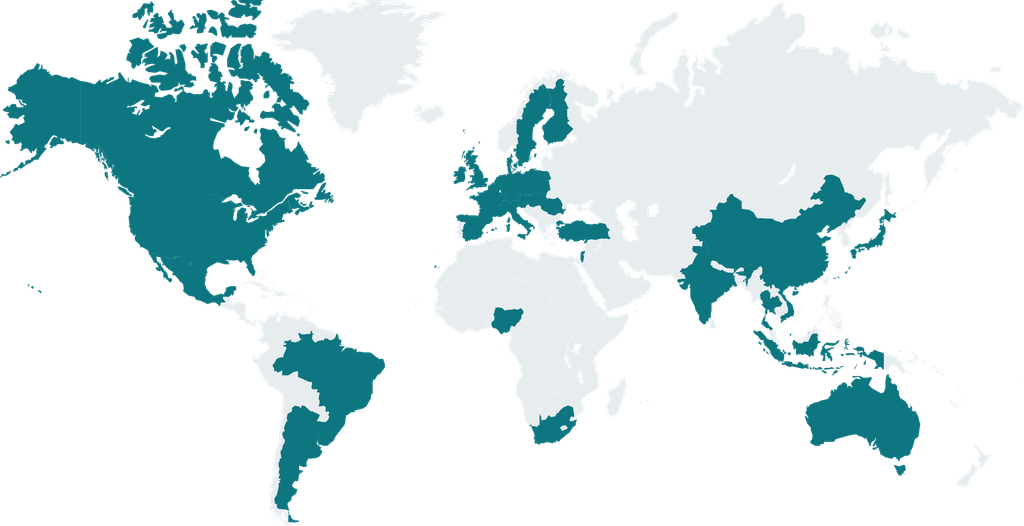
With regard to the day-to-day of working with partner firms in 34 countries: it simply works. There is common corporate identity, so you can pull out a pitch presentation and get going.
To play in the Premier League you have to be international. To play in the Champions League you have to be internationally integrated. It depends where you want to play. A purely local firm is in the second division.”
What does being part of an international partnership make possible for a firm like Saxenhammer?
In my opinion, you do not stand a chance going forward without an international network. Think of it in terms of sport. To play in the Premier League you have to be international. To play in the Champions League you have to be internationally integrated. It depends where you want to play. A purely local firm is in the second division.
Who have you worked most closely with across the partnership?
Our Clairfield partner in Italy, Equita, who we currently have three or four open mandates with. They are a big firm, and the Italian and German economies are structured in very similar ways: automotive, industrials, furniture.
We have also worked on a project with the Finnish team, and collaborated with France. France and Italy are the main European markets alongside Germany. Yamada, Clairfield’s partner in Japan and ASEAN, is probably the closest of all, because Asia matters enormously as an investor location.
Looking ahead
What does the next chapter look like for Saxenhammer, and where do you want the firm to be at 25 years?
We plan to double in size, at least in revenue. There will be expansion into other areas too, which is a natural step for us. We’re looking forward to the next chapter!
The first year of the partnership has already brought new business.
Recent crossborder transaction collaboration includes the sale of India’s Newtronic Lifecare Equipment, a manufacturer of environmental testing equipment, to Germany’s Memlab GmbH.
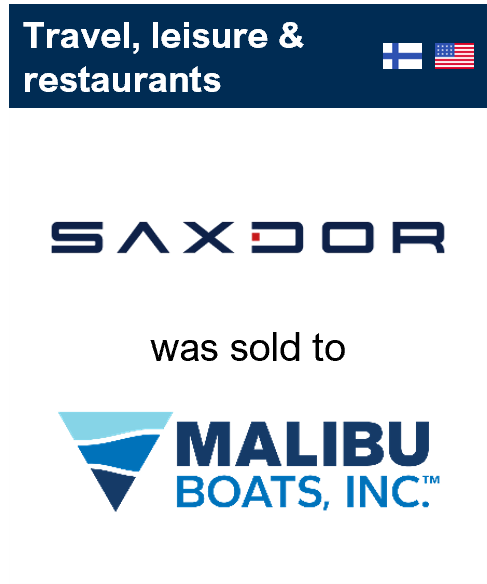
The Saxenhammer team was also involved in the crossborder sale of European yacht manufacturer, Saxdor, to US-based Malibu Boats, Inc. for US$175 million.

If you would like more information on the German market and how Clairfield’s German partner can help you, please contact us here.
